
A 2000s Town
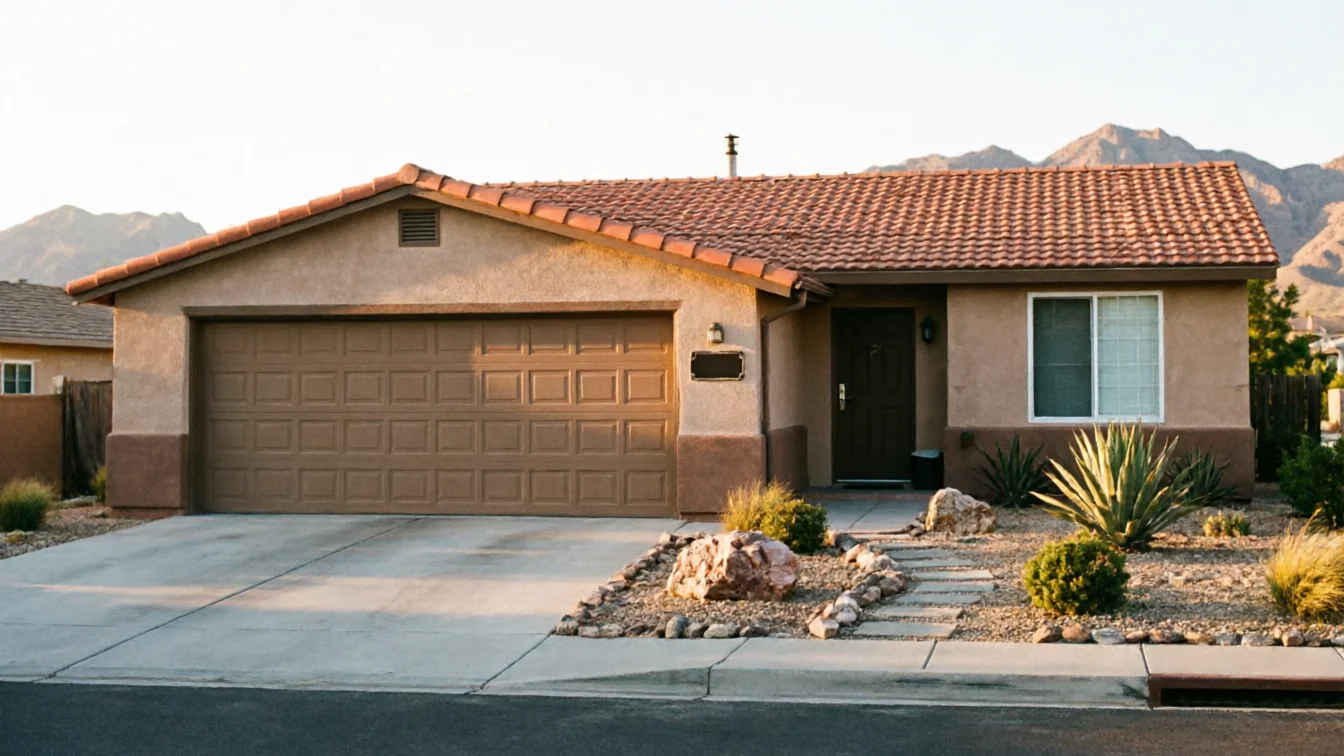
Surprise is mostly a 2000s town. Housing across the service area runs from 1979 to 2005 with the median landing around 2001, and that holds true across the seven named pockets we work in.

Surprise, AZ
Surprise Garage Door Co repairs springs, openers, and tracks on the 1980s-to-2000s housing stock that makes up most of Surprise, AZ. Same-area service, straight talk.
Garage door services


Good to know
We work in and around Surprise, including the areas closest to the core service zone: Sun City Grand about three miles to the southeast, Surprise Farms and Sierra Montana both a few miles south and southeast, Desert Oasis at Surprise to the northeast, and Prasada and Marley Park a bit further out southeast.
Further from the center we also reach Sun City West six miles out, Wittmann eight miles northwest, El Mirage nine miles south, Youngtown ten miles south, Litchfield Park thirteen miles southwest, Morristown sixteen miles north, and Tolleson at the far edge, nineteen miles southeast.
If you're not sure whether your street falls inside that range, call and ask - it's a quick answer and saves everyone a wasted trip. We'd rather tell you up front if you're outside where we can get to you same-day than have you wait around for a truck that's coming from across the valley.
Local detail
We don't post a price list because two doors that look the same from the driveway can need completely different work.
A torsion spring job on a double door costs more than a single because the spring has to handle more weight and more cycles.
An opener swap depends on whether we're matching old mounting hardware or starting fresh.
What we can tell you is what drives the number up or down out here: homes built from 1979 through 2005, with most of the stock dating right around 2001, still run a lot of original gear. That means parts that aren't on the shelf anymore, which sometimes means a repair quote climbs past what a new opener or section would run.
We'll tell you straight when fixing the old part costs more than replacing it. That's not us pushing a sale - a 20-year-old steel panel with a dent and a dead spring is often cheaper to swap than to patch piece by piece.
We quote the job after we've looked at the door, not before, because guessing over the phone gets homeowners the wrong number and gets us call-backs we didn't need.
The area
Surprise is mostly a 2000s town, and the build window shapes nearly every job we see. The same decade of construction, the same suppliers, and the same codes left thousands of garages aging on a shared schedule across the seven named pockets we work in.
Surprise is mostly a 2000s town. Housing across the service area runs from 1979 to 2005 with the median landing around 2001, and that holds true across the seven named pockets we work in.
That's not ancient construction, but it's old enough that first-generation openers, steel rollers, and single-spring setups on wider doors are starting to fail on schedule rather than by accident.
It also means the builders here were working to a different set of assumptions than a 1960s subdivision. Double garages went in standard, tracks were sized for lighter aluminum doors, and a lot of openers from the early 2000s are chain-drive units that have simply worn out their gears.
We see the same handful of failure patterns across these neighborhoods because they went up in the same ten-to-fifteen-year window, with the same suppliers, under the same codes.
With 25,147 owner-occupied houses sitting inside roughly 35,491 households in this area, that's a lot of garages built to the same spec within a few years of each other. When one fails, the one three doors down from the same build year is usually not far behind it.
What we find
Every job starts on the phone, moves to an in-person look, and only then to a price, because garage door symptoms lie more than almost anything else in a house. Here is how a typical call runs from the first description to the work itself.
You call, you describe what the door's doing - won't open, slams down, makes a grinding noise, opener runs but the door doesn't move - and we ask a few questions to figure out if it's a spring, a cable, a sensor, or the opener logic board. From there we set a time to come look at it in person, because garage door symptoms lie more than almost anything else in a house.
Once we're on site, we test the door under power and by hand, check spring tension and cable wear, and look at the track alignment before touching anything. You get a number before we start work, not after.
If the fix is small - a sensor out of alignment, a roller that's worn through - we usually finish it the same visit. If it's a full spring replacement or an opener swap, we'll walk you through what's involved and what it'll run before we start pulling anything apart.
When a Part Has to Be Ordered
We don't carry every part for every door on the truck at all times - some of the older or less common hardware has to be ordered, and we'll be upfront if that's the case rather than stringing you along.
How we work
Out here, two forces decide what breaks: a severe heat climate and a build window old enough that original hardware is simply due. Heat speeds the wear, age sets the timeline, and the dry air spares these doors the water and rust problems wetter regions deal with.
Heat is the big one. This area sits in a severe heat climate band, and that matters more for garage doors than people expect. Steel expands, lubricant breaks down faster, and torsion springs that are already carrying years of summer cycles lose temper and snap without much warning.
Nylon rollers crack and go brittle in a way they wouldn't in a milder climate, and opener circuit boards sitting in an uninsulated garage take a beating from heat soak that a board in a conditioned space never sees.
Given the build window here - 1979 to 2005, median around 2001 - a lot of doors are hitting the age where original springs and rollers are simply due, heat aside.
We see a steady run of broken torsion springs, worn rollers, and dead opener capacitors, plus the occasional cable that's frayed through from a door that's been riding slightly out of alignment for years without anyone noticing.
What we don't see as much here is water or rust damage - it's a dry climate problem set, not a wet one. That's one less thing to worry about, even if the heat more than makes up for it.
Towns we serve
Questions
Because most of the housing stock here went up in the same window, 1979 to 2005 with a median around 2001. That means thousands of garages across town got the same springs, rollers, and openers installed within a few years of each other, so they're wearing out on a similar schedule now.
Yes. This area sits in a severe heat climate band, and torsion springs, nylon rollers, and opener circuit boards all age faster under repeated heat soak in an uninsulated garage. It's one of the main reasons springs here snap without much warning.
Not everything, no. Some older or less common hardware from homes built in the early 2000s has to be special-ordered. We'll tell you up front if that's the case rather than guess and leave you waiting.
Two doors that look alike can need very different work - a single-spring job costs less than a double, and parts availability affects cost too. We look at the actual door first and give you a number before starting, instead of quoting blind over the phone.
Ready when you are
Surprise Garage Door Co repairs and installs garage doors, springs and openers in Surprise, AZ and the surrounding area.